Personal finance guide · Updated November 4, 2026
APR vs APY: What Each Rate Tells You
APR and APY both express a rate over a year, but they answer different questions. APR is used to describe the cost of borrowing; APY shows the yield on a deposit after compounding. Compare APR with other borrowing offers and APY with other deposit accounts.
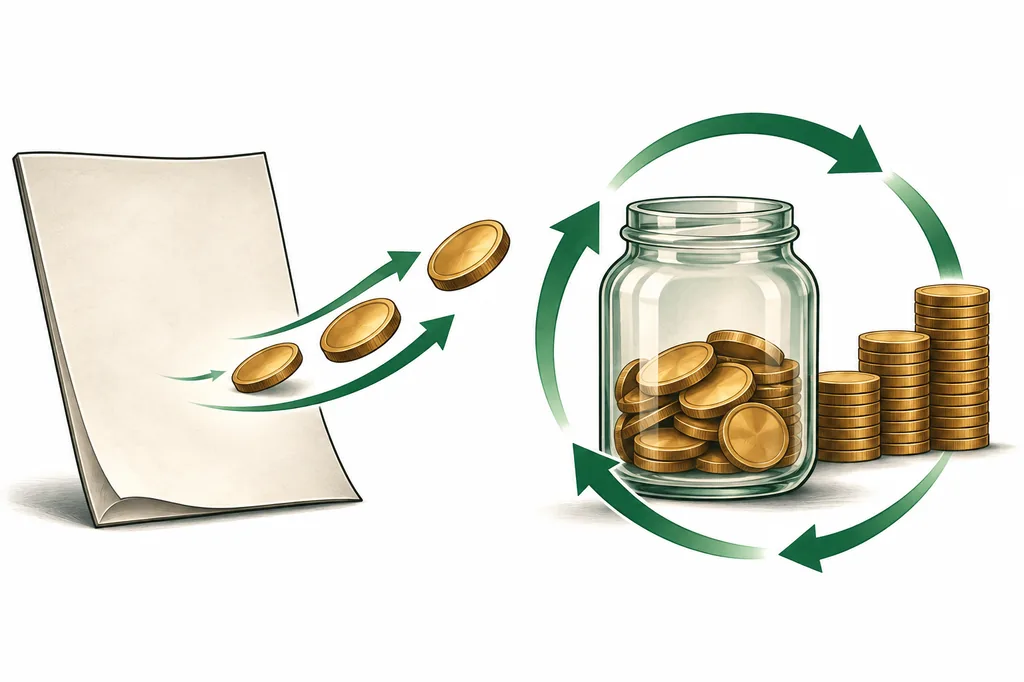
Quick answer: a lower APR is generally preferable when borrowing, while a higher APY can produce more interest on a comparable deposit. They are not interchangeable percentages because they apply to different products and calculations.
APR vs APY: the key difference
APR is a borrowing-cost measure. APY is an earnings measure for an interest-bearing deposit account. A loan advertisement may show APR, while a bank's savings disclosure may show APY. For an APR vs APY comparison, match rates within the same product category: compare borrowing APR with other borrowing APRs, and deposit APY with other deposit APYs. The two measures are not interchangeable because they describe different kinds of cash flow.
| Question | APR | APY |
|---|---|---|
| What does it describe? | The annualized cost of borrowing under the product's disclosure rules. | The annualized interest earned on a deposit, reflecting compounding. |
| Where will you see it? | Credit cards, auto loans, mortgages, and other credit offers. | Savings accounts, certificates of deposit, and some other deposit products. |
| What usually helps you? | A lower APR, when comparing similar loans with the same terms. | A higher APY, when comparing similar accounts and conditions. |
| What needs checking? | Fees included by the applicable APR rules, repayment schedule, and rate type. | Variable-rate terms, compounding, balance requirements, and withdrawal conditions. |
What APR tells you about borrowing
Annual percentage rate (APR) expresses the yearly cost of credit as a percentage. For U.S. auto loans, the Consumer Financial Protection Bureau describes APR as the cost of borrowing, including applicable fees, and explains that federal Truth in Lending disclosures let shoppers compare auto-loan APRs. The fees and calculation details depend on the product and the rules that apply, so the APR is a comparison measure rather than a complete summary of every contract term.
APR is not always the rate used in a simple one-line interest calculation. Credit cards, for example, may calculate a finance charge from a daily periodic rate, the balance during a billing cycle, and the number of days in that cycle. Promotional rates, fees, grace periods, and payment timing can also change what you pay. Read the agreement and statement method instead of assuming that APR divided by twelve is the exact monthly charge.
When comparing two loans, use the same loan amount, term, repayment type, and rate period. Compare APR with APR, then review the payment schedule and the fees each offer includes. A lower quoted rate can still be a poor fit if the term is longer, an introductory rate expires, or a fee is excluded from the comparison you are making.
What APY tells you about deposit growth
Annual percentage yield (APY) expresses the interest a deposit can earn over a year while accounting for compounding. In the United States, deposit-account APY disclosures follow Regulation DD rules. The CFPB's calculation appendix describes how annual yield is derived from the interest paid, principal, and time period. The quoted APY is useful for comparing accounts, but it does not promise a fixed future return when the rate can change.
For a fixed nominal annual rate compounded at equal intervals, a common equivalent formula is APY = (1 + r / n)n − 1. Here, r is the annual rate written as a decimal and n is the number of compounding periods in a year. More frequent compounding raises the effective yield when the nominal rate and other assumptions remain the same.
(1 + 0.05 / 12)12 − 1. With no deposits or withdrawals and a constant rate for the full year, that is about $511.62 in interest. The actual account result can differ if its rate changes, its balance changes, or its terms apply differently.
APY is not the same as a promotional headline in every situation. Check whether the rate is variable, whether a minimum balance is required, how often interest is credited, and whether fees or withdrawal limits affect your planned use. Taxes can also reduce the amount you keep, even though they are not represented by the APY itself.
How to compare loan and savings offers
- Identify the product. Borrowing calls for an APR comparison; an interest-bearing deposit calls for an APY comparison. Do not rank a loan against a savings account using the percentages alone.
- Match the conditions. Compare similar balances, terms, payment schedules, and rate periods. A 12-month deposit and a five-year loan are not equivalent because both display an annual percentage.
- Read what the rate includes. Check fee treatment, introductory periods, variable-rate rules, minimum balances, and account or loan charges in the disclosure.
- Estimate the cash result. For a savings account, APY helps estimate a year's interest when the balance and rate assumptions are clear. For a loan, use the payment schedule and total repayment figures alongside APR.
- Check access and risk. A high APY may come with conditions or a variable rate; a low APR may depend on eligibility, collateral, or a short promotional window. Choose based on the full terms and your time horizon.
Interest rate vs APR vs APY
An interest rate is the stated percentage charged on a balance or paid on a deposit before every product-specific adjustment is considered. APR is a standardized annual cost measure for credit products, with fees treated according to the applicable disclosure rules. APY is an annual yield measure that reflects compounding for deposit accounts. The same nominal interest rate can therefore lead to a different APY when compounding frequency changes, while a loan's APR may account for fees and payment timing in a way that a nominal rate does not.
These terms are used differently across countries and products. The explanations here focus on common U.S. consumer credit and deposit disclosures. If an offer is issued elsewhere, check that country's regulator and the product's own definitions before applying the U.S. comparison.
Which is better, APR or APY?
Neither is universally better. A lower APR usually reduces the stated borrowing cost among otherwise similar loan offers. A higher APY usually increases the stated interest earned among comparable deposit accounts. The useful question is not which label is larger; it is whether you are borrowing or saving and whether the offers have comparable terms.
For credit-card balance estimates, use the credit card interest calculator with the APR and billing details from your statement. For a savings-growth scenario with compounding and contributions, use the compound interest calculator. These tools estimate the scenarios entered; the lender or bank agreement controls the actual result.
APR vs APY questions
Is APY always higher than APR?
They are not direct substitutes. Compounding can make APY higher than a nominal rate on a deposit, but APR and APY usually describe different products. Compare loan APRs with loan APRs and deposit APYs with deposit APYs.
Can you compare APR vs APY directly?
No. Compare APR with APR for similar borrowing offers and APY with APY for similar deposit accounts, then review the terms and fees behind each rate.
Is a higher APY better for savings?
A higher APY generally means more stated interest on a comparable balance over a year. Check whether the rate is variable and review minimum-balance, fee, withdrawal, and promotional conditions before choosing an account.
Is a lower APR better for a loan?
Usually, when the loans have similar amounts, repayment terms, rate periods, and fee treatment. Compare the monthly payment and total repayment as well, because term length and fees affect the cash you pay.
Do credit cards use APR or APY?
Credit-card disclosures generally present an APR for borrowing. The amount charged for a billing cycle also depends on the balance, periodic rate, cycle length, grace-period status, and card agreement. APY is primarily used to describe deposit-account yield.
Does APR include every loan fee?
Not necessarily. Which fees are included depends on the product and governing disclosure rules. Review the lender's APR disclosure and fee schedule rather than assuming all charges are captured by one number.
What does APY assume about compounding?
APY reflects the effect of compounding over the disclosed annual period. A personal estimate should also state its balance, rate, compounding frequency, and whether deposits or withdrawals occur; a variable account may not keep the same APY all year.
Sources and related calculators
For U.S. product-specific details, see the CFPB's auto-loan APR key terms and its Regulation DD APY calculation appendix. Use the credit-card interest calculator for a statement-based borrowing estimate and the compound-interest calculator for a savings-growth scenario.